Tax Benefits of Owning a Home vs Renting

When people debate renting vs buying a home, one key factor often overlooked is tax savings. Renters typically write a monthly check with no tax advantages. Meanwhile, homeowners benefit from tax deductions and credits that help lower what they owe. In this guide, we’ll break down the tax benefits of owning a home vs renting so you can see how homeownership could save you thousands and why it may be the smarter financial move long-term.
We will also detail the tax advantages mortgage borrowers receive, tips for filing your taxes for mortgage qualifications, and alternative mortgage programs we offer to self-employed borrowers. This will be mentioned numerous times in this blog, but Gustan Cho Associates are not certified tax professionals and can only offer tax advice. We legally cannot tell you how to file your income tax returns. As of 1/25/2022, Americans can now file their 2021 federal tax returns.
Owning a Home versus Renting
Home ownership vs. renting is stability vs. flexibility. Home ownership builds equity over time, has tax benefits, and gives you the option to personalize your home. Renting is flexible in mobility without the long-term cost of a mortgage and usually has less repair and maintenance obligation. The right choice will still depend on your financial goals, lifestyle, and length of stay in one area.
Unlock Tax Savings Through Homeownership
From mortgage interest to property tax deductions, see why owning beats renting at tax time.
Tax Benefits of Owning a Home vs Renting in 2025
The tax benefits of owning a home vs renting in 2025 can make a big difference for buyers deciding whether to purchase or lease. Homeowners can take advantage of valuable deductions like the mortgage interest deduction, the updated state and local tax (SALT) cap of $40,000, and federal energy-efficient home improvement credits that lower overall tax liability.
Owning also provides the benefit of building equity and enjoying tax-free imputed rental income, something renters do not receive.
In contrast, renters in 2025 have very limited tax relief options, usually restricted to small state renter credits or deductions tied to business use of a home. For many families, these tax advantages make homeownership not just a choice for lifestyle but also a smart financial strategy compared to renting.
Why Taxes Matter When Deciding to Rent or Own
Choosing whether to rent or buy isn’t just about lifestyle or monthly payments. It’s also about long-term financial growth. Rent payments go to your landlord, offering no tax perks. Mortgage payments help you build equity and may come with major tax deductions. Homeownership can lower your taxable income and increase your wealth. Knowing the tax benefits of owning a home vs renting can help you make a smarter housing decision.
Mortgage Interest Deduction Explained
The largest tax deduction for homeowners is the mortgage interest deduction. What this does is allow you to deduct what you’ve paid in interest on your mortgage during the year. For most homeowners, this is the largest deduction that they qualify for. It also lowers the amount of income you’re taxed on, which can mean less that you owe to the IRS. For example, if you paid $12,000 in mortgage interest for the year, you may be permitted to deduct that from your taxable income, which will lower your overall tax payment. Renters, on the other hand, cannot deduct rent payments no matter how high they are.
Property Tax Deductions for Homeowners
Another big tax benefit of homeownership is the ability to deduct property taxes. Homeowners can deduct a maximum of $10,000 in combined state and local taxes (SALT), it includes property taxes. Renters don’t qualify for this deduction, even if their landlord pays property taxes indirectly with their rent. This can add up to thousands in yearly tax savings for homeowners a major win compared to renting.
Capital Gains Tax Exclusion on Home Sales
Owning a home doesn’t just save you money on yearly taxes, it can also help you when you sell. Homeowners can qualify for the capital gains tax exclusion if they lived in their primary home for at least two of the last five years, they may exclude up to $250,000 in profit. $500,000 for married couples. This means they can keep more money in your pocket after selling your home. Renters don’t get this opportunity since they don’t build ownership equity.
First-Time Homebuyer Tax Breaks and Credits
Buying your first home comes with extra perks. In 2025, many states and local governments still offer first-time homebuyer tax credits, down payment assistance programs, and reduced property tax rates for new buyers. These programs can save thousands in the first year of ownership. Renters rarely get comparable credits or deductions.
Can You Deduct PMI or Mortgage Insurance?
For some homeowners, private mortgage insurance (PMI) or FHA mortgage insurance premiums are deductible in certain cases.
- PMI deductions reduce taxable income, lowering the total tax owed.
- Renters paying monthly rent don’t qualify for anything similar.
While PMI deductions have phased in and out over the years, they remain an important tax benefit when available.
Do Renters Get Any Tax Benefits?
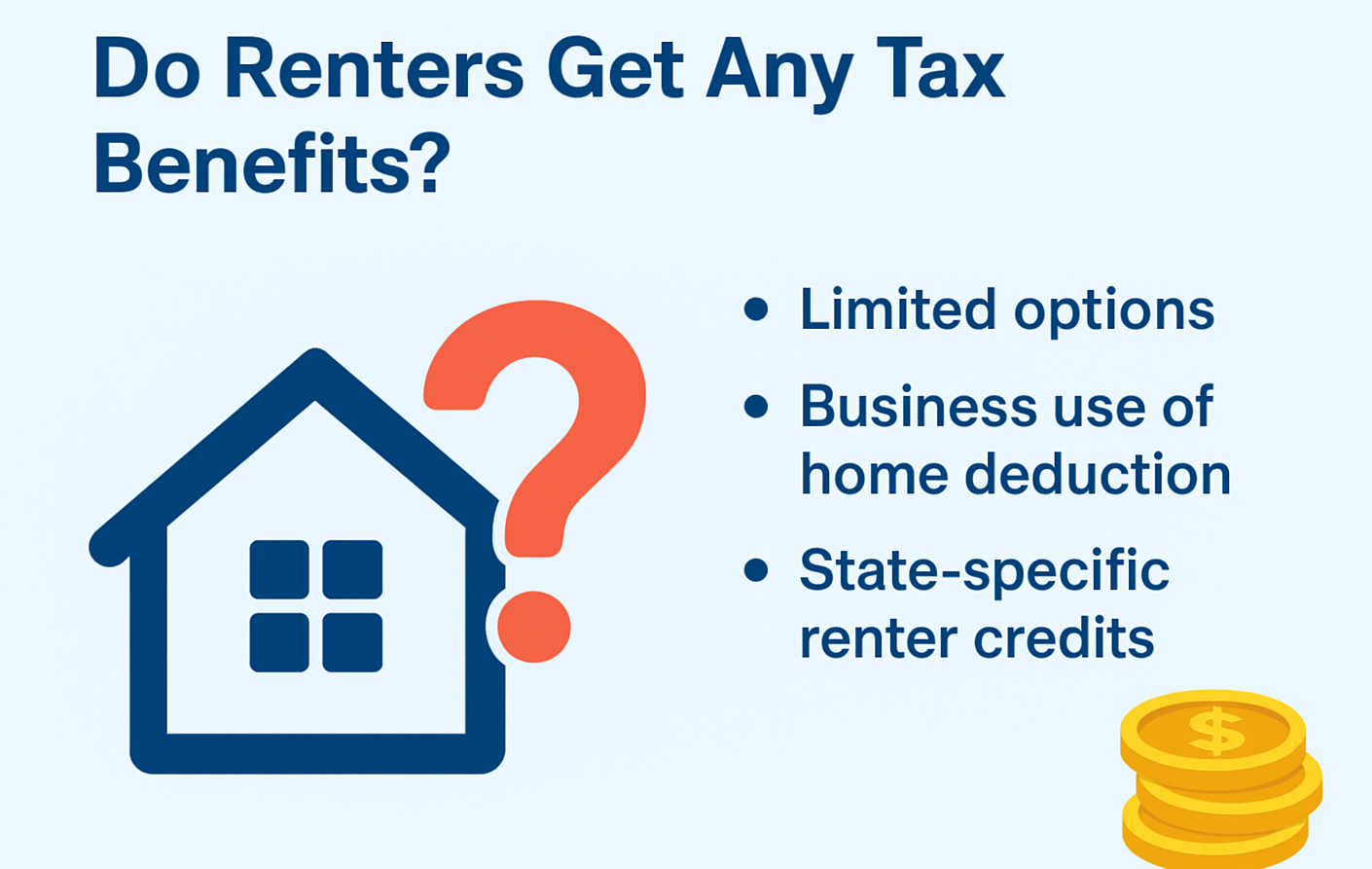 Renters usually don’t get federal tax deductions. However, a few states offer small renter’s credits to offset housing costs. These are usually minimal compared to the tax benefits of owning a home. For example, a renter’s tax credit may be worth only a few hundred dollars. A homeowner’s mortgage interest deduction can save thousands. This one of the many tax benefits of owning a home vs renting.
Renting vs. Owning — The Tax Advantage
Learn how homeowners save more on taxes compared to renters in 2025.
How Homeownership Builds Wealth Beyond Tax Savings
While tax breaks are powerful, the real magic of owning a home is building wealth over time. With each monthly mortgage payment, you gain more equity in your house. Homes often appreciate, meaning their value grows. Renters don’t build equity; they help their landlord’s wealth grow instead. The tax benefits of owning a home vs renting are just one part of the bigger financial picture.
The Tax Benefits of Owning a Home vs Renting: Which Saves More in 2025?
Here’s the bottom line, renting may be simpler and more flexible, but it offers almost no tax benefits. Owning allows you to deduct mortgage interest, property taxes, and sometimes PMI, plus gain long-term equity.
In 2025, with rents rising in many cities, the tax benefits of owning a home vs renting could tip the scales even more toward buying.
Real-Life Example – Taxes for a Homeowner vs Renter
Let’s compare the tax benefits of owning a home vs renting.
- The Renter: Pays $2,000 a month = $24,000 a year. No tax benefits.
- The Homeowner: Pays $2,000 a month = $24,000 a year. Deducts $12,000 in mortgage interest + $5,000 in property taxes = $17,000 deduction.
The homeowner lowers taxable income, which could mean thousands saved at tax time, while the renter gets nothing back.
Frequently Asked Questions (FAQs) on Tax Benefits of Owning a Home vs Renting
1. What are the tax benefits of owning a home vs renting?
One of the tax benefits of owning a home vs renting is homeowners get to take deductions for their mortgage interest, property taxes, and even mortgage insurance, but renters are usually excluded from these benefits.
2. Do renters get any tax benefits?
Renters may qualify for small state-level credits, but they don’t get major federal deductions like homeowners.
3. How does the mortgage interest deduction work?
You deduct the interest you pay on your mortgage, lowering your taxable income.
4. Can I deduct property taxes as a homeowner?
Yes. Homeowners can deduct property taxes up to federal limits.
5. Do homeowners save on capital gains taxes?
Yes. You may exclude $250K–$500K in profit when selling your primary home.
6. Are there first-time homebuyer tax credits?
Yes. Many states offer credits and incentives for new homeowners.
7. Can I deduct PMI?
Sometimes. PMI may be deductible depending on current tax laws.
8. Do renters lose money compared to homeowners at tax time?
Yes. Renters don’t qualify for mortgage interest or property tax deductions.
9. Are home equity loans tax-deductible?
If used for home improvements, the interest may be deductible.
10. Is buying always better than renting for taxes?
Not always. It depends on income, home price, and tax rules — but homeowners usually win.
Bottom Line – Tax Benefits of Owning a Home vs Renting
Renters may enjoy flexibility, but when it comes to taxes, homeowners usually come out ahead. From mortgage interest to property tax deductions, the savings add up quickly. At Gustan Cho Associates, we specialize in helping renters make the move into homeownership even if you’ve been turned down by other lenders. With no lender overlays, flexible programs, and expert guidance, we’ll help you maximize the tax benefits of buying a home. Do you have further questions about tax benefits of owning a home vs renting or are you ready to turn your rent money into tax savings and equity? Call us today at 800-900-8569 or email us at alex@gustancho.com.
Disclaimer on this article on Tax Benefits of Owning a Home vs Renting
Disclaimer – The information provided in this article about tax benefits of owning a home vs renting are opinions and should not be taken as legal tax advice. If you need help finding a certified tax professional in your area, we can point you in the right direction.
Pay Less in Taxes, Build More Wealth
Owning a home can lower your taxable income and build equity at the same time.